Introduction
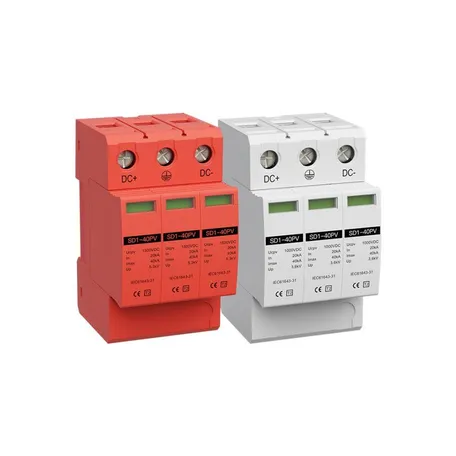
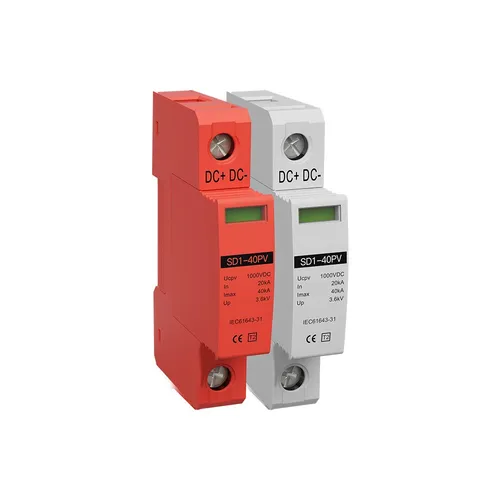
As global solar PV installations continue to expand rapidly across residential, commercial and utility-scale projects, system safety and long-term operational stability have become core concerns for installers, distributors and procurement teams. DC surge damage is one of the most common hidden faults in photovoltaic systems, often leading to inverter burnout, component aging, unexpected downtime and costly maintenance losses. Unlike traditional electrical systems, solar PV systems feature long-distance outdoor DC wiring, exposed array layouts and variable voltage operating conditions, making them extremely vulnerable to transient overvoltage and surge impacts. A properly matched DC Surge Protective Device (DC SPD) is the key line of defense for PV system safety. This professional guide systematically analyzes the causes of PV system surges, mainstream DC SPD types, core selection criteria and typical application mistakes, providing standardized reference for solar industry practitioners.
Why Solar PV Systems Are Prone to Lightning and Surge Damage
Solar PV systems are mostly installed in open outdoor environments such as rooftops, mountainous areas and industrial parks, with large-area solar arrays exposed directly to the atmosphere. The lengthy DC transmission cables between PV modules and inverters easily form large inductive loops, which are extremely sensitive to electromagnetic induction and lightning impacts. In addition, PV systems operate with variable DC voltage throughout the day, and frequent electrical switching will also trigger internal surge fluctuations. Without reliable PV surge protection, instantaneous high voltage surges can break down insulation materials, damage core electrical equipment, and even trigger fire hazards, severely restricting the service life and power generation efficiency of photovoltaic power stations.
What Causes Surges in PV Systems?
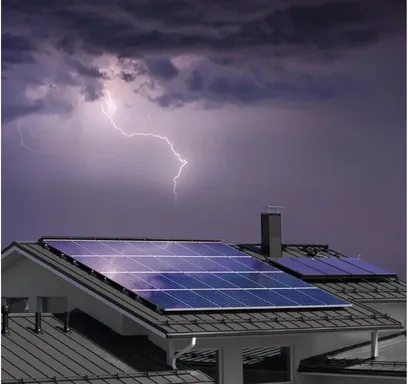
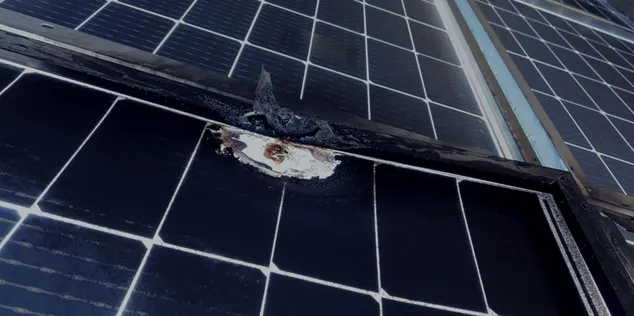
Surge interference in solar PV DC systems mainly comes from three major sources, covering natural environmental factors and system operating factors, which are the fundamental basis for SPD selection:
1. Lightning strikes
Direct lightning strikes on PV arrays or nearby indirect lightning induction will generate instantaneous high-energy surges. Even distant lightning activities can form strong electromagnetic pulses, inducing overvoltage on long DC cables. This type of surge features high energy and strong destructiveness, which is the main cause of large-scale PV equipment damage.
2. Switching operations
Daily switching actions of PV system equipment, including module array switching, inverter start-stop, DC combiner box switch on-off, will produce internal switching surges. Although the energy is lower than lightning surges, frequent occurrence will cause cumulative damage to precision electrical components, leading to gradual performance degradation of inverters and controllers.
3. Grid disturbances
Voltage fluctuations, harmonic interference, short-circuit faults and load mutations of the public power grid will conduct reverse surges to the PV system through the grid connection point. Especially for distributed photovoltaic systems, irregular grid disturbances are long-term and frequent, requiring stable SPD suppression protection.
Types of DC SPDs for Solar PV Systems
According to international electrical standards solar industry specifications, DC SPDs for PV systems are mainly divided into Type 1 SPD, Type 2 SPD and Type 1+2 combined SPD, with different protection scenarios and performance parameters, which cannot be mixed in application:
1. Type 1 SPD
Type 1 SPD is designed for heavy-duty lightning protection scenarios, mainly applicable to primary lightning protection of large-scale ground photovoltaic power stations and systems in high lightning-risk areas. It can withstand direct lightning surge current and release ultra-high-energy lightning current to the ground, solving the impact of direct lightning and strong induced lightning surges on PV systems. It is generally installed at the DC inlet of the main power distribution cabinet of large power stations as the first-level barrier for surge protection.
2. Type 2 SPD
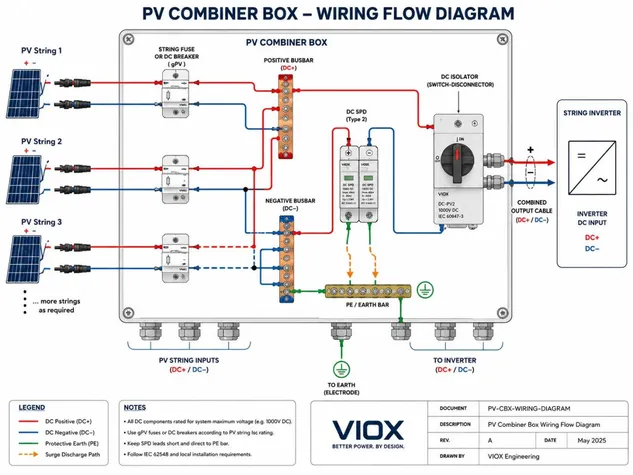
Type 2 SPD is the most widely used protection device in residential and commercial distributed PV systems. It targets induced lightning surges and system switching surges, with stable discharge performance and fast response speed. It is usually installed in PV combiner boxes and inverter DC terminals, undertaking secondary surge suppression. Most conventional 1000V DC SPD and 1500V DC SPD mainstream models in the market belong to Type 2 products, which meet the daily protection needs of most medium and small PV projects.
3. Type 1+2 SPD
Type 1+2 integrated SPD integrates the performance advantages of Type 1 and Type 2 products, realizing one-stop primary and secondary surge protection. It features wide surge energy coverage and strong comprehensive protection capability, suitable for medium and large photovoltaic power stations, rooftop PV projects in coastal thunderstorm-prone areas, and high-reliability industrial PV systems. It can effectively cope with complex surge environments and simplify system protection circuit design.
How to Choose the Correct DC SPD for PV Systems
The selection of Solar SPD cannot rely on blind matching. Practitioners need to comprehensively judge according to system parameters, installation environment and protection standards. The core selection dimensions are as follows:
1. Match system voltage level
Voltage matching is the primary principle for SPD selection. At present, mainstream PV systems in the market are divided into 1000V DC and 1500V DC voltage levels. The maximum continuous operating voltage of the selected DC SPD must be 15%-20% higher than the maximum open-circuit voltage of the PV system, so as to avoid false triggering and frequent action of the SPD under normal system operating voltage. For low-temperature environments where PV module open-circuit voltage rises, the voltage margin should be appropriately increased to ensure long-term stable operation of the equipment.
2. Confirm installation location and protection level
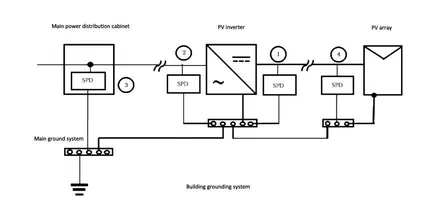
The installation position determines the SPD type and protection grade. For large centralized PV power stations in high lightning-risk areas, Type 1 or Type 1+2 SPD shall be installed at the system total incoming line. For distributed rooftop PV with cable length less than 10 meters, Type 2 SPD can be installed at the inverter DC side. For long-distance wiring systems with cable runs exceeding 10 meters, it is necessary to install Type 2 SPD in the combiner box for graded protection to avoid surge transmission along the line.
3. Verify discharge current parameters
Nominal discharge current (In) and maximum discharge current (Imax) are core performance indicators of PV Surge Protection. Residential and small commercial PV systems are suitable for 20-40kA discharge current specifications; utility-scale PV power stations need to be equipped with SPDs with 60kA and above high discharge capacity to ensure that they can withstand repeated surge impacts without damage.
4. Check industry certification qualification
Qualified Solar SPDs must comply with IEC 61643-31 photovoltaic special standards and obtain authoritative industry certification. Uncertified non-standard products have unqualified voltage resistance and discharge capacity, which are prone to failure in extreme weather and cannot provide effective protection. Procurement and installation must prioritize certified professional PV-specific DC SPD products to eliminate safety hazards.
Common Mistakes in PV SPD Selection and Installation
In actual project operation, most PV surge protection failures are caused by human selection and installation errors. The three most common mistakes in the industry are summarized as follows:
1. SPD voltage rating too low
Many practitioners choose low-voltage SPDs for cost saving. When the PV system operates at maximum open-circuit voltage or low-temperature voltage rise, the SPD will be in frequent conduction state, resulting in overheating damage, burnout failure, and even causing DC short-circuit accidents, completely losing protection function.
2. Wrong SPD type matching
Blindly using Type 2 SPD to replace Type 1 SPD for high lightning-risk large power stations will lead to insufficient resistance to high-energy lightning surges, unable to resist direct lightning impact; while using high-grade Type 1 SPD for small distributed systems will cause performance redundancy and cost waste, failing to achieve optimal cost performance.
3. Missing backup protection configuration
Some projects only install a single SPD without supporting backup protection devices such as fuses and circuit breakers. When the SPD fails and breaks down, the system cannot cut off the fault circuit in time, which is easy to cause continuous arc discharge and fire accidents, bringing major safety risks to PV power stations.
Conclusion
DC surge protection is an indispensable key link in the safe and stable operation of solar PV systems. With the large-scale and high-voltage development of PV systems (1000V DC to 1500V DC upgrading), the technical requirements for Solar SPD are also constantly improving. For industry procurement, installation and distribution practitioners, standardized selection of Type 1/Type 2/Type 1+2 DC SPD matching system voltage and scenario, adherence to certified qualified products, and avoidance of common selection mistakes are the core guarantees of PV system anti-surge capability.
In addition, regular inspection, maintenance and performance testing of SPD equipment are recommended. Timely replacement of aging and failed SPDs can effectively reduce PV system failure rates, extend equipment service life, and ensure long-term safe and efficient power generation of photovoltaic projects.